Mercedes-Benz Specialists

Mercedes-Benz Collision Repair in Beverly Hills.

Factory repair procedures, aluminum and mixed-material capability, full ADAS recalibration, and designo paint matching — from an I-CAR Platinum shop that has worked on these cars for 25 years.

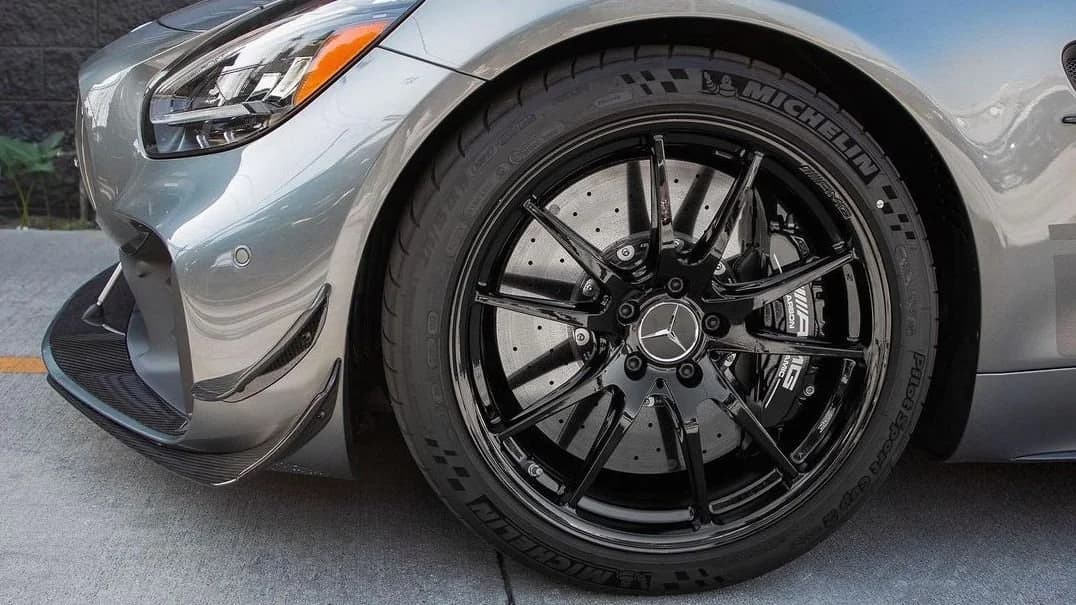
Mercedes-AMG GT R Pro at HADD Customs in Beverly Hills

More Mercedes-Benz vehicles come through our doors than any other marque, which is what happens when a shop spends 25 years in Beverly Hills. That volume matters less as a credential than as accumulated familiarity: with how these cars are built, where the factory allows a repair and where it does not, and how the driver-assistance systems behave when something behind the bumper has moved a few millimeters.

A current S-Class, GLE, or AMG GT is a mixed-material structure — aluminum panels and castings, ultra-high-strength boron steel in the pillars and rockers, composite and plastic components, and adhesive-bonded joints throughout. Repairing one correctly is procedure work, not instinct work, and the difference is invisible until the next collision.

Call (310) 988-2848

Factory procedures, pulled for your VIN

Mercedes-Benz publishes repair procedures specific to the model, model year, and equipment level: which panels may be sectioned and exactly where, which joints are welded and which are riveted and bonded, which fasteners are single-use, which components cannot be heated, and what has to be initialized or calibrated afterward. We pull those documents for your VIN before a technician starts, follow them, and put a copy in your file.

The boron steel example is the one worth understanding. The A-pillar, B-pillar, and rocker reinforcements on these cars get their strength from heat treatment. Apply a torch to straighten one and you locally destroy that strength — the pillar looks correct and folds in the next impact. Nothing about the panel announces this. The procedure does, which is exactly why we read it.

Aluminum and mixed-material structures

Aluminum work happens with dedicated tooling in a separated area. This is not fastidiousness: steel particles that land on aluminum embed in the softer metal and start galvanic corrosion, which appears as pitting and blistering under paint a year or two later, long after anyone connects it to the repair.

Structural aluminum is assembled with self-piercing rivets, flow-drill screws, and structural adhesive rather than the resistance spot welds that hold a steel unibody together. Each requires specific tooling and consumables, rivets are never reused, and anti-corrosion compound is specified at every dissimilar-metal interface. On the EQ models, the battery enclosure is part of the structure, which brings its own high-voltage shutdown procedure and inspection thresholds.

  • Dedicated aluminum work area with separated tooling
  • Self-piercing rivet and flow-drill joining per MB procedure
  • Three-dimensional structural measuring, before and after
  • Boron steel handled to specification — no unauthorized heat
  • High-voltage shutdown procedure on EQ models
  • Corrosion protection, seam sealer, and cavity wax restored

DISTRONIC, cameras, and recalibration

A modern Mercedes-Benz carries forward radar, a multi-purpose camera behind the windshield, corner radar for blind-spot and cross-traffic alerts, ultrasonic park sensors, and a surround-view camera system. Their aim is measured in fractions of a degree, because a forward camera one degree off is looking several feet wide of its target at the far end of its range.

Bumper removal, windshield replacement, mirror replacement, suspension or ride-height changes, and any structural repair can each trigger a calibration requirement. Static calibration needs a level floor, controlled lighting, and manufacturer target boards at exact distances; dynamic calibration needs specific road conditions, which in Los Angeles traffic is a genuine scheduling problem rather than a formality. We complete what the procedure requires, and you get the report.

designo, tri-coat, and matching a car that has lived in the sun

Mercedes-Benz uses some of the most difficult finishes to match in the industry. designo and other tri-coats have a translucent mid-coat carrying the pearl, so the final color depends on how many mid-coats were applied — matching one means building a let-down panel to find the exact count, then replicating it on the car. Metallic silvers and greys have their own problem: flake orientation, which is a function of gun setup and technique rather than formula.

On top of that, the paint code identifies a formula, not the color of your specific car after several years of Southern California sun. Every match is sprayed out on a card first, evaluated under corrected daylight and again in real sunlight, and blended into adjacent panels so there is no hard edge for the eye to catch.

Independent specialist, not a volume department

A dealership body shop is typically a department inside a business whose primary product is selling and servicing cars, measured on throughput. Our entire reputation is the repair. The same Mercedes-Benz repair procedures are available to us by subscription, the same OEM parts arrive in the same boxes, and the person who estimated your car is someone you can actually reach while it is in the shop.

Where a manufacturer-authorized facility is genuinely the right answer — restricted structural components on a very new platform, or high-voltage battery pack service on some EQ models — we say so. That is not a sales strategy; it is why people come back with the next car.

Models we work on

C-Class, E-Class, S-Class and Maybach, CLA and CLS, GLA through GLS, the G-Class, SL and AMG GT, and the EQ range. AMG models are a regular part of the work — the AMG GT R Pro in our portfolio came to us for a wheel color change, taking the wheels from black with a polished lip to full high-gloss black so the car read as one continuous dark shape rather than a bright ring at each corner.

Alongside collision work we handle wheel refinishing, paint protection film, color change wraps, chrome delete, and full customization on Mercedes-Benz vehicles — all in-house at the same Beverly Hills shop.

FAQ

Mercedes-Benz collision repair — common questions

Do I have to take my Mercedes-Benz to the dealer for collision repair?
No. Under California Insurance Code section 758.5 you choose the repair facility, and that includes choosing an independent specialist over a dealer body shop. What matters is whether the shop pulls and follows the Mercedes-Benz repair procedures for your VIN, has the equipment your car's construction requires, and calibrates the driver-assistance systems afterward. We do all three, and we will tell you when a specific repair genuinely belongs at a manufacturer-authorized facility.
Can you repair aluminum body panels and structures on an S-Class or EQS?
Yes. Aluminum work is performed with dedicated tooling and separated from steel work, because steel particles embedded in aluminum start galvanic corrosion that shows up under paint months later. Structural aluminum is joined with self-piercing rivets, flow-drill screws, and structural adhesive per the Mercedes-Benz procedure rather than welded, and heat during straightening is kept inside the specified range.
Will my DISTRONIC, lane keeping, and camera systems work correctly afterward?
They will, because we recalibrate them and document it. Bumper work, windshield replacement, mirror replacement, suspension or alignment changes, and structural repair can each trigger a static or dynamic calibration requirement. A diagnostic scan alone is not enough — a camera can report no fault codes while aimed several degrees off. You receive the calibration report with the car.
Can you match designo and other tri-coat Mercedes-Benz finishes?
Yes. Tri-coat finishes have a translucent mid-coat whose final color depends on how many coats were applied, so they are matched with a let-down panel that shows exactly how many produce your car's color. The match is then checked under corrected daylight lamps and again in real sunlight before anything is called finished.
Do you use genuine Mercedes-Benz parts?
On anything structural, anything a restraint system depends on, and anything carrying a sensor or a calibration target, we specify OEM. Your policy language determines what your insurer owes; where they will only cover an alternative part, we tell you what the difference costs and let you decide rather than making the decision quietly.
How long does a Mercedes-Benz collision repair take?
Cosmetic work is typically three to five days, single-panel repairs one to two weeks, multi-panel two to four weeks, and structural repair with calibration four to eight weeks or more. Parts are the usual constraint — current-model body panels frequently ship from Germany, and no amount of shop effort changes that lead time.
Begin

Bring your vision
to life.

Free estimates, rental cars, towing, and direct insurance handling. Call HADD Customs in Beverly Hills to schedule.

Call (310) 988-2848
Get In Touch

How would you like to begin?

Text us for the fastest answer, or send your details and we'll get back to you with a free estimate.

Send a message now

Or call us directly at (310) 988-2848