Ferrari Specialists

Ferrari Collision Repair in Beverly Hills.

Aluminum spaceframe repair, carbon fiber evaluation, three-layer paint matching, and the patience these cars require — from an I-CAR Platinum shop that has worked on exotics for 25 years.

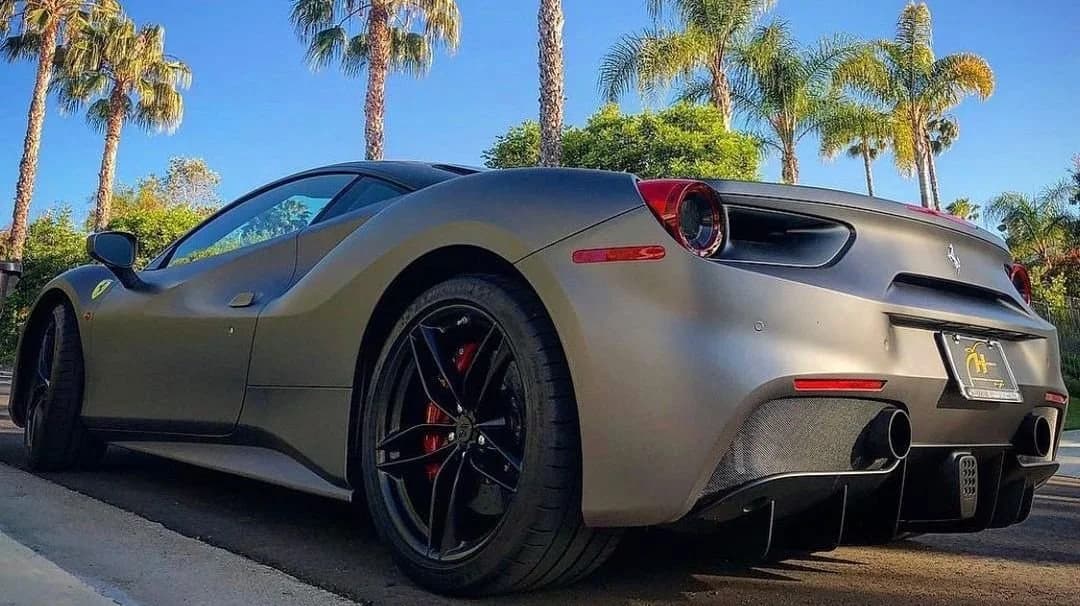
Ferrari 488 GTB at HADD Customs in Beverly Hills

A damaged Ferrari is a different problem from a damaged luxury sedan, and not only because of what it costs. These cars are built around aluminum spaceframes with bonded and riveted joints, carry carbon fiber in places where damage is invisible from the outside, and wear multi-stage paint that cannot be matched from a code. The parts are frequently built to order. Nothing about the repair rewards hurrying.

What that means in practice is a slower, more documented process than most shops run — evaluation before disassembly, the manufacturer's procedure pulled for the specific car, and an honest conversation at the start about which parts of the job we will do and which, if any, belong at a manufacturer-authorized facility.

Call (310) 988-2848

Aluminum spaceframes and bodywork

Ferrari's aluminum construction is assembled with a combination of extrusions, castings, rivets, and structural adhesive. Repairing it correctly requires separated aluminum tooling, the right rivet and bonding equipment, and — most importantly — respect for the material's limits. Aluminum has far less elongation than steel, work-hardens quickly, and is permanently weakened if straightening heat exceeds the specified range. Technicians use temperature-indicating measurement rather than judgment.

Everything structural is measured in three dimensions against the manufacturer's specification before work begins, corrected with anchored sequential pulls, and re-measured until it reads within tolerance. You get the before-and-after printout, which is both proof the car is straight and the document that answers any future question about the repair.

  • Separated aluminum area with dedicated tooling
  • Riveted and bonded joints per the factory procedure
  • Three-dimensional measuring, before and after
  • Carbon fiber evaluated rather than assumed intact
  • Multi-stage paint matched with a let-down panel
  • Pre- and post-repair scans with the reports in your file

Carbon fiber: evaluated, not assumed

Metal dents, and the dent tells you where the energy went. Carbon fiber is stiff until it is not: a component can take an impact, spring back, and look perfect while the layers inside have separated. That internal delamination is the failure mode that matters, and it is invisible from the outside.

So carbon components get evaluated before anything is assumed. Cosmetic damage — clear-coat scratches, chipped edges, curb rash on a lip — is genuinely repairable, including matching the weave across a repair so it disappears. Damage that reaches the laminate, produces a soft spot, or sounds dull under a tap test is a different category, and structural carbon damage on a monocoque generally requires a manufacturer-authorized path. We will tell you which one you have.

Exposed carbon also has a Southern California problem: clear coat over weave is UV-sensitive and yellows faster than paint. Paint protection film over exposed carbon is one of the most worthwhile protective measures available on a car that lives outdoors here.

Matching Ferrari paint

Ferrari's signature reds and its pearl whites are multi-stage finishes: a ground coat, a translucent mid-coat carrying the pigment, and clear on top. Because the mid-coat is transparent, each additional pass deepens the color — which means the number of coats is part of the formula, and it is not written on the door jamb.

The only reliable way to match one is a let-down panel: a card sprayed with a progressively increasing number of mid-coats, so the technician can see exactly how many produce your car's color and then replicate that count on the vehicle. Every match is then checked under corrected daylight and in real sunlight, and blended into adjacent panels rather than sprayed to a hard edge, because the eye catches an edge far more readily than a gradual transition.

Parts, timelines, and telling you the truth about both

Many Ferrari body components are not sitting on a shelf. They are built to order, and the factory's schedule is the factory's schedule. A repair that would take three weeks on a German sedan can take considerably longer here for no reason other than a panel that has not been made yet.

We would rather give you an honest range at the estimate than a comfortable number we cannot hold, and we would rather tell you a date has slipped the week it slips than at the end. Where a clean recycled OEM component or a repairable original is a legitimate alternative to a months-long wait, we will lay out the trade-off and let you decide.

Protecting the car's value, not just its appearance

On a car of this class, the repair file is part of the car's history. Parts invoices, the manufacturer's procedures followed, structural measurements, calibration reports, and photographs of the work in progress all belong to you, and all of it matters the day someone else evaluates the car. A thorough repair with documented OEM parts is worth materially more on resale than an identical-looking repair with no paper behind it.

It also supports a diminished value claim. In California, if another driver was at fault, the loss in your vehicle's market value after a properly completed repair may be recoverable from their insurer — and on a six-figure car that is not a trivial number. We are not appraisers, but we give you the complete file the claim depends on.

Models we work on

488 GTB and 488 Spider, F8 Tributo, 458, Portofino and California, Roma, 812, GTC4Lusso, and the SF90 hybrid range — plus older cars where the conversation is as much about originality as about repair.

Alongside collision work we do protection and appearance work on Ferraris regularly. The 488 GTB in our portfolio was wrapped in 3M Dark Satin Grey with gloss black wheels: a complete change of character with the factory paint preserved underneath, which on a car like this is usually the right call over a repaint.

FAQ

Ferrari collision repair — common questions

Do I have to take my Ferrari to a dealer for collision repair?
Not in most cases. California Insurance Code section 758.5 gives you the right to choose the repair facility. Some structural work — particularly damage to a carbon fiber monocoque on the mid-engine cars — does require a manufacturer-authorized path, and we will tell you plainly when that applies to your car rather than attempting work that should go elsewhere.
Can you repair the aluminum spaceframe on a 488 or F8?
Aluminum structural work is performed in a separated area with dedicated tooling, using the joining methods the manufacturer specifies — riveting, bonding, and welding only where permitted. Structure is measured in three dimensions before and after, and heat during straightening is kept inside the specified range because over-heating aluminum permanently anneals it. Where Ferrari's procedure prohibits repair of a component, it gets replaced.
How do you match Ferrari paint?
With a spray-out card every time, and a let-down panel on the three-layer colors. Ferrari's reds and its pearl whites are multi-stage finishes where a translucent mid-coat determines the final color, so the number of mid-coats has to be established on a test panel and then replicated exactly. The match is checked under corrected daylight lamps and again in real sunlight before anything is signed off.
How long do Ferrari parts take?
Longer than most owners expect, and it is the main driver of the timeline. Many body components are built to order rather than stocked, so lead times are set by the factory's schedule. We give you an honest range at the estimate and tell you when a date slips rather than at the end.
Will a repair hurt my Ferrari's value?
A documented, OEM-parts, procedure-followed repair protects value far better than a fast one. On these cars the file is part of the car's history: parts invoices, the manufacturer's procedures followed, structural measurements, and calibration reports. If another driver was at fault, that same documentation supports a diminished value claim against their insurer, which in California is a real avenue on a high-value vehicle.
Do you wrap and protect Ferraris as well as repair them?
Yes. Paint protection film on the impact areas, full or partial coverage, ceramic coating, and reversible color change wraps — the 488 GTB in our portfolio was wrapped in 3M Dark Satin Grey with gloss black wheels, which changed the car completely while leaving the factory paint untouched underneath.
Begin

Bring your vision
to life.

Free estimates, rental cars, towing, and direct insurance handling. Call HADD Customs in Beverly Hills to schedule.

Call (310) 988-2848
Get In Touch

How would you like to begin?

Text us for the fastest answer, or send your details and we'll get back to you with a free estimate.

Send a message now

Or call us directly at (310) 988-2848