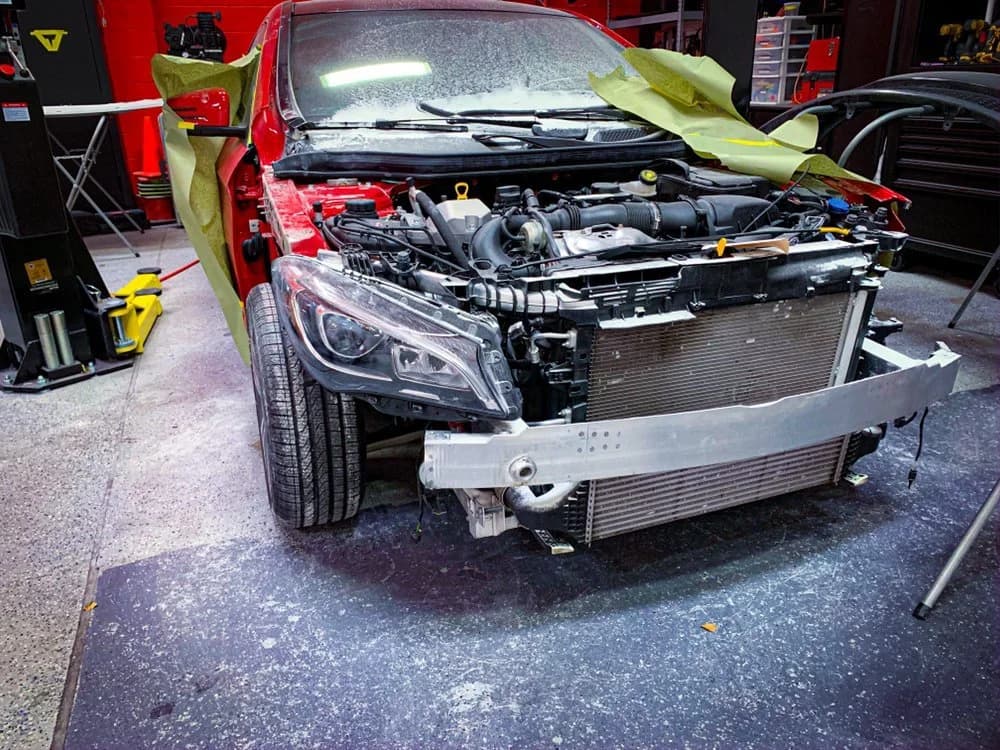
Bonded aluminum: the glue is the structure
On a bonded aluminum architecture, the structural adhesive carries load across the joint and the rivets hold the parts in position while it cures. Welding a joint that the factory bonded is not a stronger substitute — it locally changes the aluminum's properties and gives you a joint the structure was never engineered around.
So repairs follow what Aston Martin specifies: the correct adhesive product, the correct surface preparation, joints separated only where the procedure allows, single-use rivets replaced rather than reused, and the full cure observed before the car moves to the next stage. Where a bonded structural component may not be repaired, it gets replaced at the factory joint.
Aluminum work happens in a separated area with dedicated tooling, because steel particles embedded in aluminum start galvanic corrosion that surfaces under the paint long after anyone would connect it to the repair. Straightening heat is measured, not judged — aluminum permanently anneals above its specified range while looking perfectly normal.
- —Structural adhesive applied per specification, with full cure observed
- —Single-use rivets replaced, never reused
- —Bonded joints separated only where the procedure permits
- —Separated aluminum area with dedicated tooling
- —Composite and carbon panels evaluated rather than assumed intact
- —Three-dimensional structural measuring, before and after