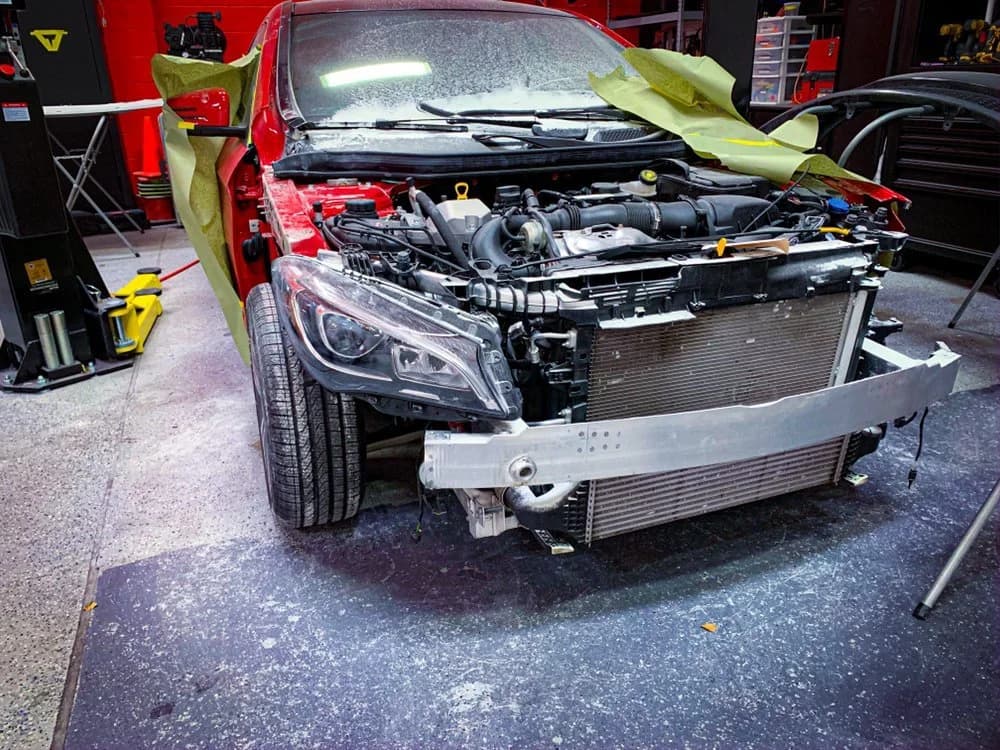
Mixed-material bodies and where the rules change
On the sedans and SUVs, the aluminum closures sit on a predominantly steel structure with ultra-high-strength steel in the pillars and rockers. That combination means the shop has to know which panel it is touching before it picks up a tool: aluminum needs separated tooling and its own consumables, boron steel cannot be heat-straightened without destroying the strength it got from heat treatment during manufacturing, and the joints between the two need specific corrosion protection.
Aluminum work is done in a separated area for the standard reason — steel dust settling on aluminum embeds and starts galvanic corrosion that only shows itself as blistering under the paint a year or two down the line. Rivets are single-use, adhesive gets its specified cure, and the anti-corrosion compound goes back at every dissimilar-metal interface.
Structural repairs are measured in three dimensions against the factory specification before and after, with the printout going into your file alongside the procedures we pulled for your VIN.
- —Separated aluminum work area with dedicated tooling
- —Boron and ultra-high-strength steel replaced, not heat-straightened
- —Three-dimensional structural measuring, before and after
- —MC20 carbon components evaluated for delamination
- —Tri-coat finishes matched with a let-down panel
- —Pre- and post-repair scans with the reports in your file