Audi Specialists

Audi Collision Repair in Beverly Hills.

Audi Space Frame aluminum capability, multi-material structural repair, e-tron high-voltage procedure, and pearl-effect paint matching — from an I-CAR Platinum shop 25 years into luxury collision work.

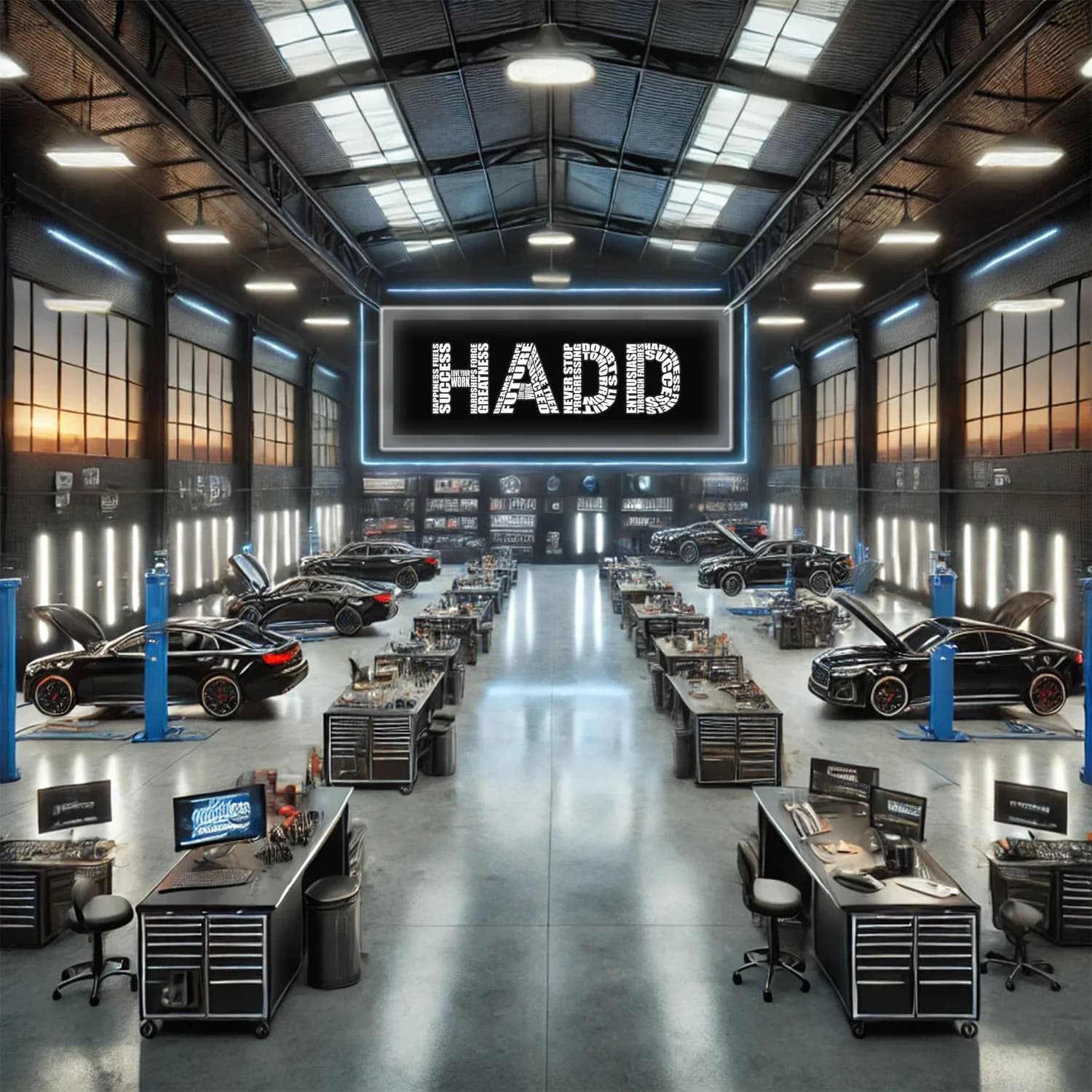
The HADD Customs auto body shop in Beverly Hills

Audi has been building aluminum-intensive cars for longer than almost anyone, and the Audi Space Frame is the reason its repair requirements are more specific than most owners expect. An A8 is not a steel unibody with aluminum panels bolted to it — the structure itself is aluminum extrusions, castings, and sheet, joined by rivets, bonding, and welding processes that each apply only where the procedure says they apply.

The rest of the range is multi-material: aluminum, high-strength and boron steel, magnesium, and composite in a single body-in-white, chosen part by part. That is excellent engineering and a genuine problem for a shop that treats every panel the same way. We do not.

Call (310) 988-2848

Audi Space Frame and multi-material construction

The Space Frame concept puts aluminum extrusions and vacuum die-cast nodes where the loads are and hangs the panels off that. Repairing it means knowing which node may be replaced, where an extrusion may be sectioned and where it may not, which joints are riveted and bonded versus welded, and what the factory permits at all — Audi restricts a good deal of it, and the restrictions exist because the structure's crash behavior depends on those joints performing exactly as designed.

Aluminum work is done in a separated area with dedicated tooling. Steel particles that land on aluminum embed in the softer metal and set off galvanic corrosion that shows up as blistering under the paint a year or two later, by which point nobody connects it to the repair. Rivets are single-use, adhesive is applied within its specified open time and allowed to cure, and every dissimilar-metal interface gets the specified corrosion protection.

Everything structural is measured in three dimensions against Audi's specification before work starts, corrected with anchored sequential pulls, and re-measured until it reads within tolerance. You get the before-and-after printout.

  • Separated aluminum area with dedicated tooling and consumables
  • ASF joints riveted, bonded, and welded only where permitted
  • Three-dimensional structural measuring, before and after
  • Boron steel replaced rather than heat-straightened
  • High-voltage shutdown procedure on e-tron models
  • quattro driveline geometry verified after structural work

Audi pre sense, radar, and paint thickness that matters

Audi pre sense, adaptive cruise, side assist, and rear cross-traffic alert rely on a forward camera behind the windshield, forward radar behind the grille, corner radar units in the rear bumper, ultrasonic sensors, and on many cars a surround-view camera system. All of them have aim tolerances measured in fractions of a degree, and all of them are affected by ordinary body work.

The Audi-specific detail worth knowing: the rear corner radar units transmit through the painted bumper cover, and the total film build over them is specified. A shop that adds extra coats to bury a repair, or refinishes a cover without regard to thickness, degrades side assist and cross-traffic performance in a way that sets no fault code and shows up only when the car fails to warn someone.

We calibrate what the procedure requires — statically on a level floor with correct targets at measured distances, dynamically on the road where specified — and put the report in your file.

e-tron: high voltage, and a battery that carries load

On the e-tron GT, Q8 e-tron, and Q4 e-tron the high-voltage battery is mounted in the floor and forms part of the structure. Body repair begins with the documented shutdown and isolation procedure, verified before any panel comes off, and side, rocker, and underbody impacts carry defined inspection requirements even on a car that drove in under its own power with no warnings displayed.

The e-tron GT shares a great deal of its architecture with the Porsche Taycan, including the 800-volt system, and the same discipline applies. Where Audi's procedure calls for battery pack service or evaluation beyond an independent shop's scope, we tell you and route that portion of the work rather than improvising around it.

Matching Audi paint, including the difficult ones

Audi's pearl-effect and crystal-effect finishes are multi-stage: a ground coat, a translucent mid-coat carrying the effect pigment, and clear over the top. Because the mid-coat is transparent, each pass deepens the color, so the number of coats is part of the formula and it is not printed anywhere on the car. Matching one means building a let-down panel to establish the count, then replicating it.

The solid greys are their own trap. Nardo Grey has no metallic flake to hide behind, which means any difference in tint, texture, or gun technique reads immediately as a mismatched panel. Cars in flat, unforgiving colors get more blending into adjacent panels, not less.

Every match is sprayed out on a card first, checked under corrected daylight lamps and again in real sunlight, and blended rather than cut to a hard edge — the eye catches an edge far more readily than a gradual transition.

quattro, alignment, and what happens after the panels are on

A quattro car sends torque to all four corners, so suspension geometry after a structural repair is not just a tire-wear question. Thrust angle out of specification means the car tracks slightly crab-wise, the driveline works against itself, and the driver-assistance cameras — which are calibrated relative to the thrust line — end up aimed at something other than where the car is actually going.

That is why alignment comes after structural measuring rather than instead of it, and why calibration comes after alignment. Doing those in the wrong order produces a car that measures correctly on paper and behaves wrong on the road.

Models we work on

A3 through A8, the S and RS versions of each, Q3 through Q8, the TT, the R8, and the e-tron range including the e-tron GT, Q8 e-tron, and Q4 e-tron. Aluminum-intensive cars — A8, R8, and the e-tron GT in particular — are the ones where the construction question matters most, and they are handled accordingly.

Alongside collision work we do wheel refinishing, paint protection film, ceramic coating, color change wraps, chrome delete, and full customization on Audis, all performed in-house at our Beverly Hills shop.

FAQ

Audi collision repair — common questions

Can you repair an Audi Space Frame?
Aluminum structural work is performed in a separated area with dedicated tooling, using the riveting, bonding, and welding methods Audi specifies for each joint — and only where the procedure permits repair at all. The Space Frame's crash performance depends on those joints behaving exactly as designed, so where Audi restricts sectioning or requires replacement of a node or extrusion, that is what happens. Everything structural is measured in three dimensions before and after.
Do I have to go to an Audi dealer for collision repair?
No. California Insurance Code section 758.5 gives you the choice of facility and your insurer pays either way. What matters is whether the shop pulls Audi's repair procedures for your VIN, has genuine separated aluminum capability, and recalibrates the driver-assistance systems afterward. Where a repair genuinely requires a manufacturer-authorized facility, we will say so rather than attempt it.
Will Audi pre sense and side assist work correctly after a bumper repair?
Yes, and there is a detail specific to Audi worth knowing. The rear corner radar units transmit through the painted bumper cover, and total refinish film build over them is specified. Adding extra coats to bury a repair degrades side assist and cross-traffic alert without setting any fault code. We hold film build to specification and complete the calibrations the procedure requires, with the report in your file.
Do you work on e-tron models?
Yes, for body and collision work. The high-voltage system is shut down and isolated per the documented procedure before any body work begins. Because the battery is a structural floor member, side, rocker, and underbody impacts carry a defined inspection requirement even when the car shows no fault. Where the procedure calls for battery pack service beyond an independent shop's scope, we tell you and route that portion of the work.
Can you match Nardo Grey or a pearl-effect Audi color?
Yes, and they are different problems. Pearl and crystal effect finishes are multi-stage, so the number of translucent mid-coats determines the final color — we build a let-down panel to find the count and replicate it. Solid colors like Nardo Grey have no flake to disguise variation, so they need more blending into adjacent panels, not less. Both are checked under corrected daylight and again in real sunlight.
How long does an Audi collision repair take?
Cosmetic work is usually three to five days, single-panel repairs one to two weeks, multi-panel two to four weeks, and structural repair with calibration four to eight weeks or more. Parts lead time is the usual constraint — aluminum structural components and RS-specific parts ship from Germany on the factory's schedule.
Begin

Bring your vision
to life.

Free estimates, rental cars, towing, and direct insurance handling. Call HADD Customs in Beverly Hills to schedule.

Call (310) 988-2848
Get In Touch

How would you like to begin?

Text us for the fastest answer, or send your details and we'll get back to you with a free estimate.

Send a message now

Or call us directly at (310) 988-2848