Lucid Specialists

Lucid Collision Repair in Beverly Hills.

One of the highest-voltage architectures on the road, an aluminum-intensive body, and a sensor suite that includes lidar — all of it handled to procedure at an I-CAR Platinum shop.

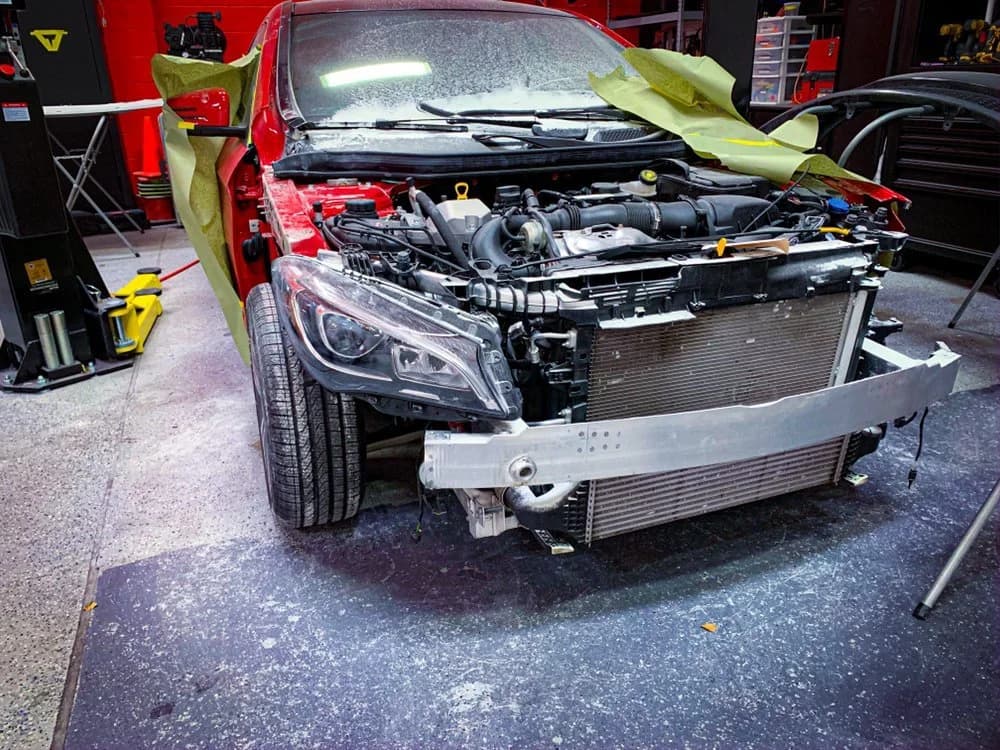
Front-end collision repair in progress at HADD Customs in Beverly Hills

The Lucid Air is an unusual car to repair, and the reasons are worth knowing before you need one repaired. It runs one of the highest-voltage architectures in production — around 900 volts, against the 400 volts most electric cars use — which raises the stakes on shutdown and isolation discipline rather than changing the principle. Its body is aluminum-intensive, and it carries a sensor suite that on DreamDrive Pro includes lidar alongside the usual cameras and radar.

It is also a car that comparatively few shops have worked on. Lucid has built a fraction of the volume Tesla has, which means fewer technicians anywhere have seen one apart, and parts and procedure access are a genuine consideration rather than a formality. We would rather have that conversation with you at the estimate than partway through the repair.

Call (310) 988-2848

900 volts, and what that changes

A higher pack voltage does not change the procedure so much as raise the cost of skipping any part of it. Body work on a Lucid begins with the documented high-voltage shutdown and isolation, verified before a panel is removed and before any grinding, cutting, or welding happens anywhere near the pack or its cabling.

The battery sits in the floor and contributes to the structure, so damage assessment includes it. Underbody strikes, rocker impacts, and side collisions carry defined inspection requirements even on a car that arrived under its own power with nothing on the display. A pack that has taken an impact also has handling and observation requirements attached, and those are followed rather than judged.

Where the procedure requires high-voltage component or pack service beyond what an independent shop may perform, we tell you and route that portion of the work. That is not us declining the job; it is the part of the job that belongs elsewhere being sent there.

  • Documented high-voltage shutdown and isolation before any body work
  • Structural battery inspected after underbody and side impacts
  • Separated aluminum area with dedicated tooling
  • Three-dimensional structural measuring, before and after
  • Camera, radar, and lidar calibration completed and documented
  • Parts and procedure availability confirmed at the estimate

Aluminum-intensive body construction

The Air's body makes heavy use of aluminum, which brings the same rules that apply to every aluminum-intensive car: work performed in a separated area with dedicated tooling, because steel particles that settle on aluminum embed in the softer metal and start galvanic corrosion that appears as blistering under the paint a year or two later.

Structural joints are riveted and bonded rather than spot welded, rivets are single-use, and structural adhesive gets its specified surface preparation, open time, and cure. Straightening heat is measured rather than judged, because aluminum permanently anneals above its specified range while giving no visual sign of it.

Everything structural is measured in three dimensions against specification before work begins and re-measured until it reads within tolerance. You keep the before-and-after printout along with the procedures we pulled for the car.

DreamDrive, lidar, and calibration

DreamDrive Pro is a more sensor-dense system than most: cameras, radar, ultrasonics, and lidar, which very few vehicles on the road carry. That density means more of a body repair intersects with the sensor suite than owners expect — a bumper cover, a windshield, a mirror, or a ride-height change can each disturb something that has to be recalibrated.

We complete the calibrations the procedure requires for the work performed and put the report in your file. As on every modern car, a clean post-repair scan is not the same thing as a correctly aimed sensor, and we do not present it as though it were.

Parts, procedures, and honesty about a low-volume car

Lucid has built far fewer cars than the established marques, and that shows up in two places: parts lead times, and how many people have done this before. Some body components are readily obtainable and some are not, and a back-ordered structural part on a low-volume vehicle is a genuinely open-ended wait.

So the estimate conversation on a Lucid includes availability, not just price. We establish what can be sourced and in what window before the car is disassembled, because a car sitting in primer waiting on a panel helps nobody. Where a repair requires resources only a manufacturer-authorized facility has, we say so at the start.

You are not required to use any particular shop — California Insurance Code section 758.5 puts that choice with you, and your insurer pays either way. What we owe you in return is a straight answer about what we can and cannot do on this specific car.

Paint and finish

Lucid's finishes include metallics and multi-stage colors where a translucent mid-coat determines the final depth, so the coat count is part of the formula and appears nowhere on the vehicle. Those get a let-down panel to establish the count before anything is sprayed on the car.

Every match begins with a spray-out card rather than a code, is evaluated under corrected daylight lamps and again in real sunlight, and is blended into the adjacent panels rather than cut to a hard edge. The Air has long, flat flanks and a very smooth surface, which is exactly the shape that shows a lazy blend from across a parking lot.

Models we work on

Lucid Air in its Pure, Touring, Grand Touring, and Sapphire forms, and the Gravity. Collision, panel, and paint work, plus the protection and appearance work these cars are well suited to.

Alongside collision repair we do paint protection film, ceramic coating, color change wraps, and wheel refinishing on Lucids, performed in-house at our Beverly Hills shop.

FAQ

Lucid collision repair — common questions

Can an independent shop repair a Lucid?
For body, panel, and paint work, yes — with the right equipment and discipline. California Insurance Code section 758.5 gives you the choice of facility. What the car requires is documented high-voltage shutdown before any body work, separated aluminum capability, three-dimensional structural measuring, and recalibration of a dense sensor suite afterward. Where a repair needs resources only a manufacturer-authorized facility has, we say so at the estimate rather than partway through.
Does the 900-volt system make the repair more dangerous?
It raises the consequence of skipping a step, not the difficulty of following one. The shutdown and isolation procedure is documented and it is verified rather than assumed before a panel is removed or anything is cut or ground near the pack or its cabling. That discipline is the same on any electric vehicle; on a higher-voltage architecture there is simply no version of the job where it is optional.
My Lucid took an underbody hit but drives fine. Does it need inspecting?
Yes. The battery is a structural floor member, so underbody strikes, rocker impacts, and side collisions carry a defined inspection requirement even when the car shows nothing on the display and drives normally. Enclosure deformation matters independently of whether the car reports a fault, which is why the inspection is procedural rather than symptom-driven.
Will DreamDrive work correctly after a repair?
The cameras, radar, ultrasonics, and — on DreamDrive Pro — lidar are calibrated per the procedure for the work performed, with the report in your file. Because the sensor suite is unusually dense, more of an ordinary body repair intersects with it than on most cars: a bumper cover, a windshield, a mirror, or a ride-height change can each trigger a calibration requirement.
How long will parts take?
That is the honest question on a low-volume car, and we answer it at the estimate rather than after disassembly. Some Lucid body components are readily obtainable; others are not, and a back-ordered structural part on a car built in these numbers can be an open-ended wait. We establish availability before the car comes apart, because a vehicle sitting in primer waiting on a panel serves nobody.
Do you do paint protection film and ceramic coating on a Lucid?
Yes, in-house. Film across the nose, hood leading edge, mirrors, rockers, and the leading edges behind the wheels, full or partial coverage, plus ceramic coating and color change wraps. The Air's long, smooth flanks show road debris and swirl marks readily, which makes protection work worthwhile earlier in the car's life than owners often assume.
Begin

Bring your vision
to life.

Free estimates, rental cars, towing, and direct insurance handling. Call HADD Customs in Beverly Hills to schedule.

Call (310) 988-2848
Get In Touch

How would you like to begin?

Text us for the fastest answer, or send your details and we'll get back to you with a free estimate.

Send a message now

Or call us directly at (310) 988-2848